How Long Does uPVC Spraying Actually Last? The Honest 2026 Guide
How long does uPVC spraying actually last? A straight-talking 2026 guide to the real lifespan of sprayed uPVC windows and doors in the UK — and what makes the finish last 10–15 years instead of 18 months.
How long does uPVC spraying last? The short answer
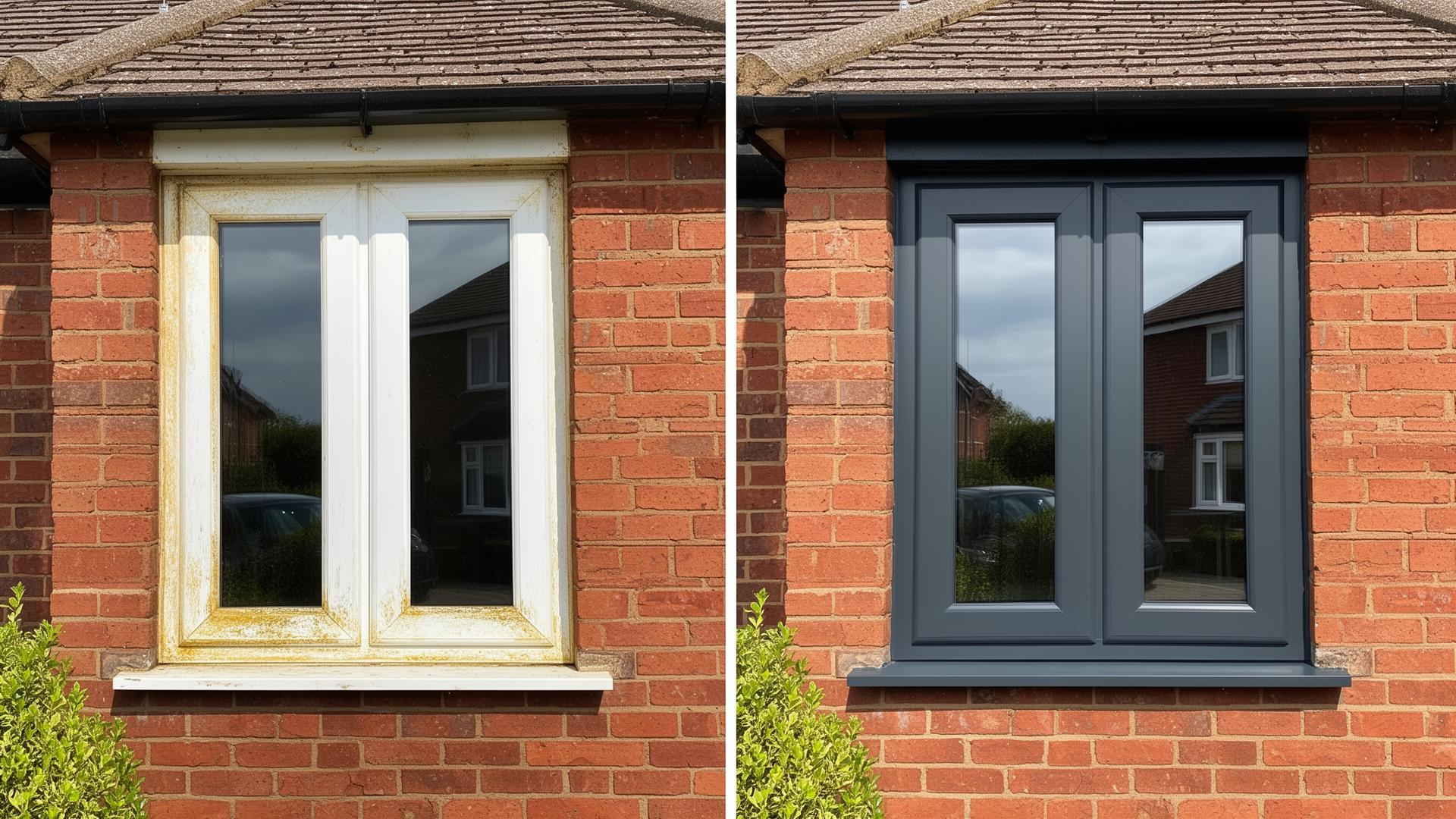
A professionally sprayed uPVC window or door, finished with a 2K polyurethane top-coat over the correct adhesion primer, will comfortably last 10 to 15 years in the UK climate before any meaningful colour shift, chalking or wear becomes visible.
That's the same family of paint chemistry used on cars and aircraft — so the lifespan of sprayed uPVC isn't really limited by the paint itself. It's limited by how well the frame was prepared, how much UV the elevation gets, and whether the right primer system was used in the first place.
Done badly — single-pack aerosol, no adhesion promoter, no proper degrease — uPVC spraying can fail in under 18 months. Done properly, we expect our work to outlive the warranty by a wide margin. If you want the full breakdown of what a professional job actually involves, our uPVC window and door spraying service page walks through the process step by step.
Why 10–15 years is realistic (and not marketing)
The headline figure isn't a guess. 2K polyurethane was originally developed for automotive refinishing, where coatings are expected to survive a decade of stone chips, jet washes, UV and freeze–thaw cycles without failing. uPVC windows ask less of the paint than a car bonnet does.
Independent coating data from manufacturers like Sika, Adler, Tikkurila and Mipa publishes accelerated weathering results for their exterior 2K systems in the 12–20 year range. UK weather is mild relative to those tests — no extreme UV, no salt-spray coastline (for most homes), and moderate temperature swings.
In practice, the earliest sprayed uPVC windows we've revisited at 8–10 years old still look the same colour as the day they were finished. The first thing to soften is the very high-gloss sheen on south-facing elevations, which gradually moves towards satin — most homeowners don't notice unless we point it out.
What actually affects the lifespan of sprayed uPVC
1. The 2K system used. This is the single biggest factor. A proper two-pack polyurethane chemically cross-links as it cures, bonding to the substrate. Single-pack acrylics and 'multi-surface' aerosols sit on top of the uPVC and peel within a year or two. Always ask your sprayer which system they're using — Sika, Adler, Tikkurila and Mipa are the reputable brands.
2. Surface preparation. Frames must be degreased, abraded and primed with the correct adhesion promoter for low-energy plastics. A 'wipe down with white spirit' is not preparation. Bad prep is the number-one reason DIY uPVC spray paint jobs fail within months.
3. Sun exposure. South and west-facing elevations get the most UV and will be the first to show any sheen change. North-facing frames often look untouched at 15 years. This isn't a paint defect — every exterior coating in the world fades from UV; the difference is how fast.
4. Colour choice. Darker colours like Anthracite Grey (RAL 7016) and Jet Black (RAL 9005) absorb more heat and slightly accelerate UV ageing, but with modern 2K systems the difference over 10 years is barely visible. If you're weighing colour options, our Anthracite Grey vs Agate Grey comparison covers the most common pairing.
5. Cleaning habits. A soft cloth and warm soapy water twice a year is all sprayed uPVC needs. Avoid abrasive pads, solvent cleaners and pressure washers held within 30cm of the frame — these can shorten lifespan unnecessarily.
How long does uPVC door spraying last vs windows?
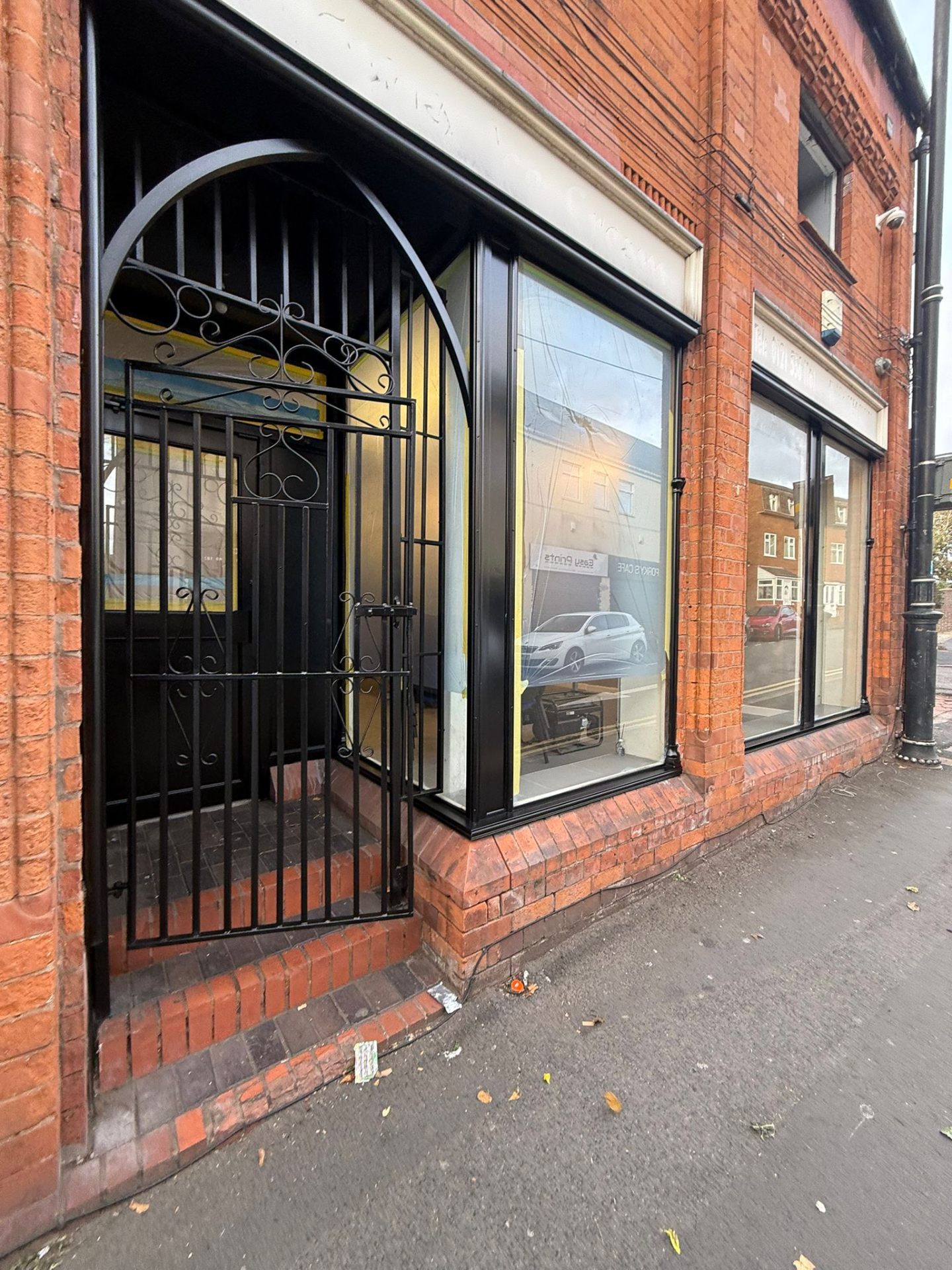
uPVC and composite doors typically wear at the same rate as the windows around them, with one caveat: the handle area and lock surround see daily contact and grime. Expect those zones to need a wipe-down more often, but the coating itself holds up identically — 10 to 15 years.
Garage doors sprayed with the same 2K system also fall in the 10–15 year range. They're more exposed than windows because there's no eaves overhang protecting them, but they're also rarely touched, which balances out.
Conservatory frames are the most demanding application because of the sheer area of exposed plastic and the temperature swings inside a glass roof. Even there, a properly sprayed conservatory in white, anthracite or chartwell green should look the same in a decade.
What our 10-year guarantee actually covers
Every Spray Genius job comes with a written 10-year guarantee on the invoice against peeling, flaking and significant colour failure. 'Significant' means a visible change a reasonable person would notice in normal light — not a paint-chip-level inspection.
What's covered: Adhesion failure (peeling, flaking, bubbling), pigment failure (sudden colour shift, chalking beyond normal weathering), and any application defect that becomes visible within 10 years.
What's excluded: Normal gradual weathering, physical damage (knocks, ladder dents, jet-wash impact), substrate failure (a uPVC frame splitting or warping behind the paint is not a paint problem), and damage from solvent or abrasive cleaning.
We do come back. If something does fail inside 10 years — which is rare — we re-prep and re-coat the affected area at no cost. Real examples are on our recent work and reviews page.
How to tell whether a sprayed uPVC job will actually last
Before booking any uPVC sprayer, ask these five questions. If the answers are vague or missing, the finish probably won't last.
1. Which 2K system are you using? A real answer names a brand: Sika, Adler, Tikkurila, Mipa. 'Trade paint' or 'exterior aerosol' is a red flag.
2. What primer goes on first? There should be a named adhesion promoter or plastic primer specified for low-energy substrates. No primer = no adhesion = early failure.
3. What prep is included? Degrease, abrade, mask, prime, two top-coats. If any of those is missing from the written quote, the price is too good to be true.
4. Is the guarantee written on the invoice? A verbal '10 years' is worthless. A guarantee you can email back to the company in 7 years is the only kind that counts.
5. Can I see local work that's 1–2 years old? Fresh work always looks good. Older local jobs are the only honest evidence a sprayer's finish actually lasts. Our recent work gallery is dated for exactly this reason.
How long does uPVC spraying last vs replacing the windows?
A new set of mid-range uPVC windows is rated for roughly 20–25 years before the frames themselves degrade. So at 10–15 years, a sprayed window is still well inside the lifespan of the underlying plastic.
That's the real value of spraying: you're refreshing the visible surface (the paint) on a substrate that has another decade of structural life left in it. When the coating eventually does need refreshing in 12–15 years, it's a far smaller job than replacement — a quick re-prep and a fresh 2K top-coat, not a £6,000–£15,000 replacement programme.
If you want the full pricing breakdown, our 2026 uPVC spraying cost guide lays out per-window, per-door and per-house figures.
Frequently asked questions
How long does sprayed uPVC last in direct sunlight? South and west-facing 2K-sprayed frames last 10–15 years in the UK. The sheen softens a touch faster than north-facing frames, but the colour holds.
Will my sprayed uPVC windows peel? Not if they were prepared and primed correctly with a 2K system. Peeling is almost always a sign of either no adhesion promoter or a single-pack paint applied over a low-energy plastic.
Do sprayed uPVC windows fade? All exterior coatings fade eventually. With modern 2K polyurethane, fade is gradual and barely perceptible in the first decade — most clients only notice when comparing against a freshly sprayed sample.
Can sprayed uPVC be re-sprayed when it eventually wears? Yes. After 12–15 years a light scuff-sand, fresh primer and two top-coats restore the finish completely. Re-spraying is significantly cheaper than the original job because frames are already in known good condition.
Does the colour affect how long it lasts? Marginally — darker colours run a touch warmer in summer. With 2K systems the practical difference over 10 years is small enough to ignore. Pick the colour you actually want.
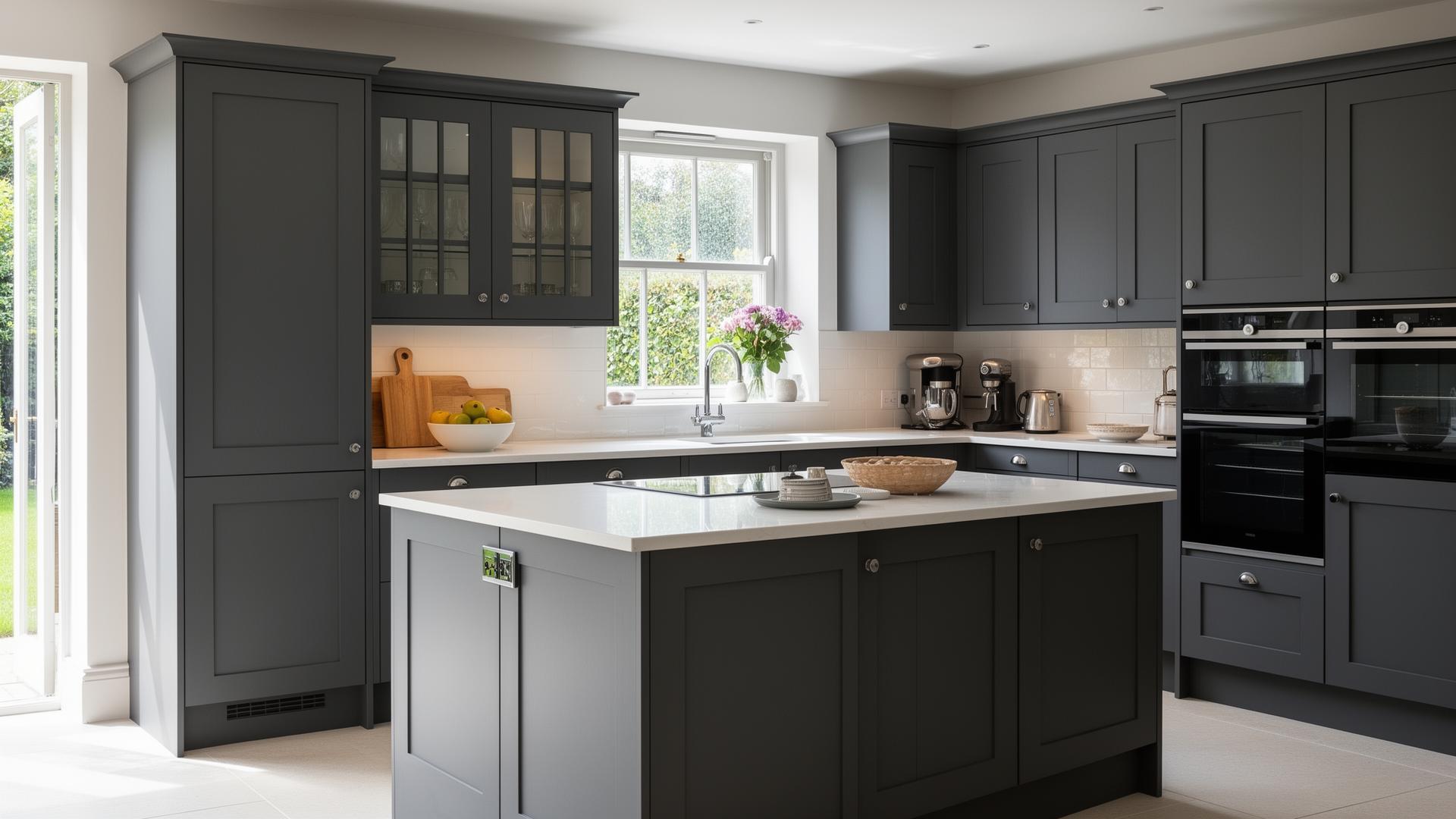
How long does kitchen spraying last by comparison? Sprayed kitchen cabinets last 8–12 years inside the home (no UV, no weather) — slightly less than exterior uPVC, because they get daily handling. Our kitchen cabinet spraying page covers the kitchen side in detail.