uPVC Spray Paint vs Professional Spraying: Which Actually Lasts?
Can you really respray uPVC windows yourself with a tin of spray paint? An honest 2026 comparison of DIY vs professional uPVC spraying — cost, lifespan and finish.
The short answer
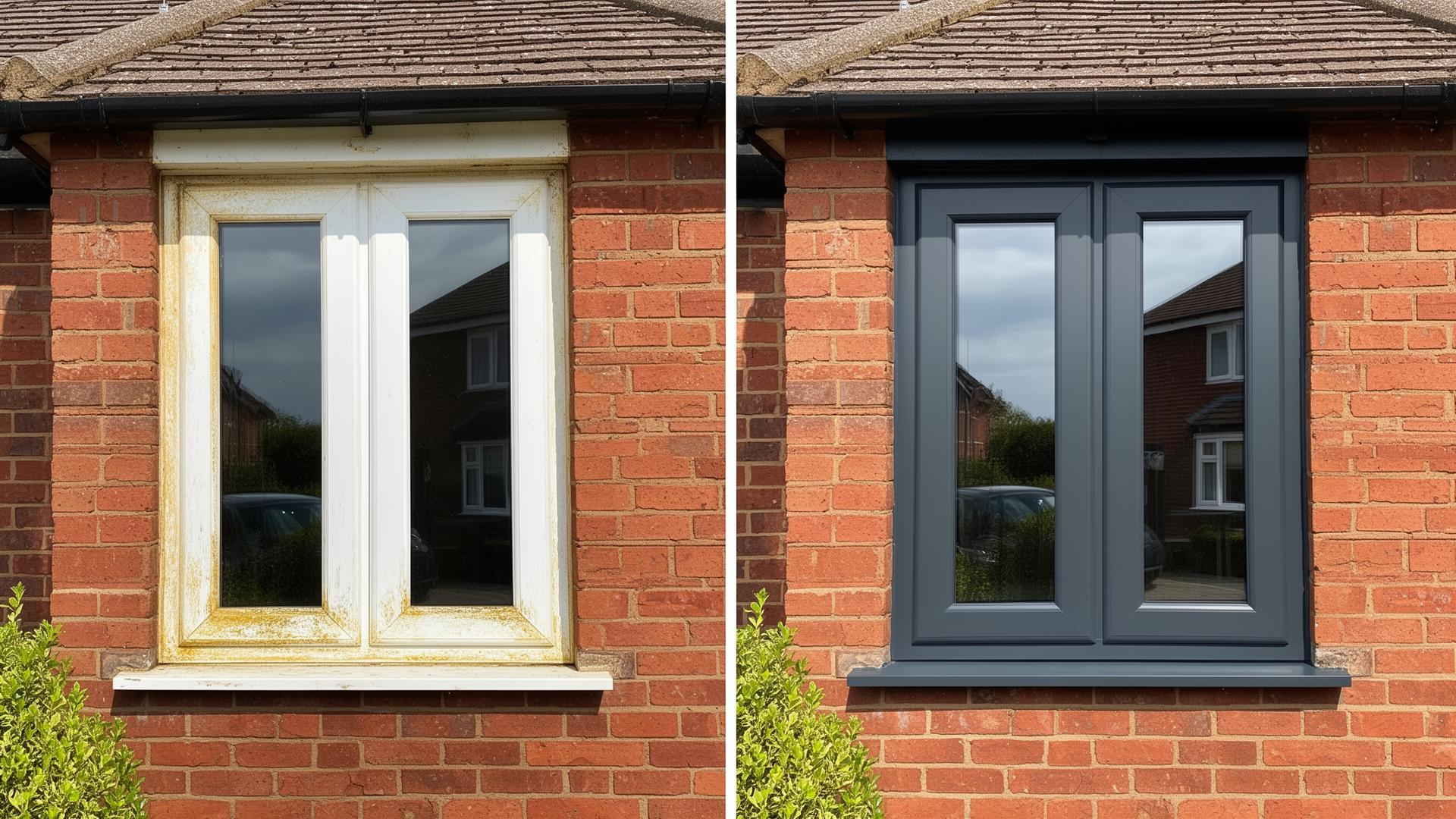
DIY uPVC spray paint — the aerosol tins and brush-on tubs sold for £15–£40 — will technically stick to a uPVC frame, but it almost always shows brush marks, runs or chalking within 12–18 months. Professional spraying using 2K polyurethane lasts 10–15 years with a written guarantee.
If you're choosing between the two on cost alone, a single front door done professionally is £180–£350. The DIY route looks like £30, but realistically costs £80–£150 once you've bought primer, top-coat, masking, abrasive pads and a respirator — and you'll be repeating the job in a year or two.
Why DIY uPVC spray paint usually fails
The paint chemistry isn't built for uPVC. Most aerosol 'multi-surface' or 'plastic' paints are single-pack acrylics. uPVC has a low-energy surface — paint won't bond mechanically or chemically without an adhesion promoter and the right primer system.
Prep is harder than it looks. Professional sprayers degrease, abrade and apply an adhesion primer (and sometimes flame-treat) before any top-coat goes on. A quick wipe with white spirit isn't prep.
Aerosols can't lay down a wet film. Spray cans deliver too little paint per pass for a true wet edge, which is why DIY uPVC sprays often look orange-peeled or streaky in sunlight.
Outdoor exposure is brutal. UV, rain and thermal expansion of uPVC pull single-pack paints apart within a season or two. South-facing elevations fail fastest.
What professional uPVC spraying actually involves
Professional uPVC spraying uses 2K polyurethane — a two-part coating that chemically cross-links as it cures, the same family of paint used on cars and aircraft. Once cured, it's flexible, UV-stable and bonded to the substrate rather than sitting on top.
A typical professional job includes: full masking of glass and brickwork (3–5 hours on an average house), degreasing and abrasion, a flexible adhesion primer, two coats of 2K polyurethane top-coat, and a written 10-year guarantee against peeling and significant colour failure.
Our full breakdown is on the window and door spraying service page.
Cost compared: DIY vs professional (2026)
Single uPVC casement window
DIY: ~£25–£40 in materials, 3–5 hours of your time. Realistic lifespan: 12–18 months.
Professional: from £120 per frame as part of a larger job. Lifespan: 10–15 years with a guarantee.
uPVC front door
DIY: ~£40–£60 in materials, half a day. Realistic lifespan: 12 months.
Professional: £180–£350. Lifespan: 10–15 years with a guarantee.
Whole-house exterior (semi)
DIY: not realistic for most homeowners — you'd need scaffolding, a sprayer and 60–80 hours of work. Materials alone would run £300–£500.
Professional: £1,800–£3,500 all-in (windows, doors, fascias).
When DIY uPVC spray paint is fine
There are situations where DIY uPVC spray paint genuinely makes sense:
A small interior item — a uPVC window cill in a utility room, an internal door frame — anywhere it's not exposed to UV and weather.
A short-term fix before selling where you just need the frames to look tidy for viewings and the buyer is planning a full replacement.
Touch-ups on already-painted frames where you can colour-match.
For anything exterior, anything south-facing, or anything you want to look right for more than a year, the per-year cost of professional spraying is lower.
Choosing a professional sprayer — what to look for
Ask which 2K system they use. Sika, Adler, Tikkurila and Mipa are reputable. If the answer is vague or mentions aerosol cans, walk away.
Ask for a written guarantee on the invoice — not just a verbal '10 years'. Any reputable sprayer will provide one as standard.
Ask to see recent local work. Six months to two years old is the most telling — fresh work always looks good. Our recent work and reviews page has dated examples.
Check the prep description. Degrease, abrade, prime, two top-coats. If any of those steps is missing from the quote, the finish won't last.
Frequently asked questions
Can I really not just paint uPVC with normal exterior paint? You can apply it, but it almost never lasts. uPVC's surface energy is too low for standard masonry or wood paints to bond properly.
Is professional uPVC spraying messy? No — properly masked, there's no overspray on brickwork, paths or glass. Spray Genius jobs leave the property tidier than we found it.
How long until I can use my windows after spraying? Touch-dry in an hour, gentle use the next day, fully cured in 7 days.
What colours can you do? Any RAL or BS code, plus bespoke matches from a physical sample. Anthracite Grey (RAL 7016) and Jet Black (RAL 9005) are the most popular — see our anthracite vs agate grey guide for help choosing.