Painting vs Spraying a Garage Door: What Actually Lasts (2026 UK Guide)
Can you brush-paint a garage door and get a finish that lasts? An honest 2026 UK comparison of painting vs professional spraying — cost, durability and finish.
The short answer
You can paint a garage door with a brush and roller, but on a metal up-and-over, sectional or roller door it almost always shows brush marks, runs or chalking within 12–18 months. A professional garage door respray using 2K polyurethane gives a factory-smooth finish that lasts 10–15 years with a written guarantee.
On cost, a tin of exterior metal paint is £25–£40 and a single-garage DIY job realistically costs £60–£120 once you've bought primer, top-coat, rollers, masking and a respirator. A professional garage door spray in the UK is typically £250–£500 for a single door and £400–£700 for a double — and you're not redoing it next spring.
If you'd rather just send us photos and get a fixed quote, our garage door spraying & refurbishment page explains how the free quote works.
Why brush-painting a garage door usually fails
Most garage doors are steel. Steel needs a proper degrease, a key, and a metal-bonding primer before any top-coat. A wipe-down with white spirit isn't prep — the paint sits on top of factory wax and lifts in sheets the first hard winter.
Brush and roller can't lay down a flat film on large panels. Up-and-over doors are huge flat surfaces designed to be seen at a glance. Brush marks, lap lines and roller stipple show up dramatically in low afternoon light.
Single-pack exterior paints aren't built for thermal movement. Metal garage doors expand and contract a lot between a frosty morning and a sunny midday. Cheap paints crack at the panel edges and around the handle within a season.
Roller and sectional doors are nearly impossible by hand. The slats and recesses can't be brushed evenly — you'll get heavy build-up in the grooves and bare spots on the high points.
What professional garage door spraying actually involves
Professional garage door spraying uses 2K polyurethane — a two-part coating that chemically cross-links as it cures, the same family of paint used on cars. Once cured it's flexible, UV-stable and bonded to the metal rather than sitting on top.
A typical garage door respray includes: full masking of the surround, driveway and any glazing; a thorough degrease and key; a metal-bonding adhesion primer; two coats of 2K polyurethane top-coat sprayed with HVLP equipment; and a written 10-year guarantee against peeling and significant colour failure.
Most single doors are completed in a day. Doubles take one to two days. The door is usable within a few hours of the final coat.
Cost compared: DIY paint vs professional spray (2026 UK)
Single up-and-over garage door
DIY: £60–£120 in materials, a full weekend of work. Realistic lifespan: 12–18 months before touch-ups are obvious.
Professional spray: £250–£500. Lifespan: 10–15 years with a guarantee.
Double garage door
DIY: £100–£180 in materials, two weekends. Lifespan: 12–18 months.
Professional spray: £400–£700. Lifespan: 10–15 years with a guarantee.
Sectional or roller door
DIY: not realistic — slats and recesses can't be brushed evenly.
Professional spray: £350–£600 single, £550–£800 double.
Per-year, professional spraying works out cheaper from year two onwards. Full pricing for related work is in our how much does uPVC spraying cost? guide.
Finish quality — what you actually see from the kerb
Brush and roller leave a slight texture even when applied well, and the texture is most visible exactly where you don't want it: large flat panels in raking sunlight. The eye reads it as 'painted' rather than 'new'.
Sprayed 2K leaves a uniform, factory-smooth surface with no brush marks, lap lines or roller stipple. From the kerb the door looks brand-new rather than refurbished — which is the whole point.
Colour depth is also different. Sprayed polyurethane carries pigment all the way through the film, so the colour stays rich for years. Brushed exterior paint fades faster on south-facing doors and chalks visibly within two summers.
When DIY painting a garage door is fine
There are situations where rolling or brushing a garage door honestly makes sense:
A timber side-hinged door where a traditional brushed exterior wood paint is the expected look.
A short-term tidy-up before selling where the buyer is replacing the door anyway and you just need it presentable for viewings.
A garage door you can't see from the road — back-of-property, agricultural, or a workshop door where appearance doesn't matter.
For anything front-of-house, anything metal, and anything you want to look right for more than a year, the per-year cost of professional spraying is lower and the finish is in a different league.
Popular colours homeowners are choosing
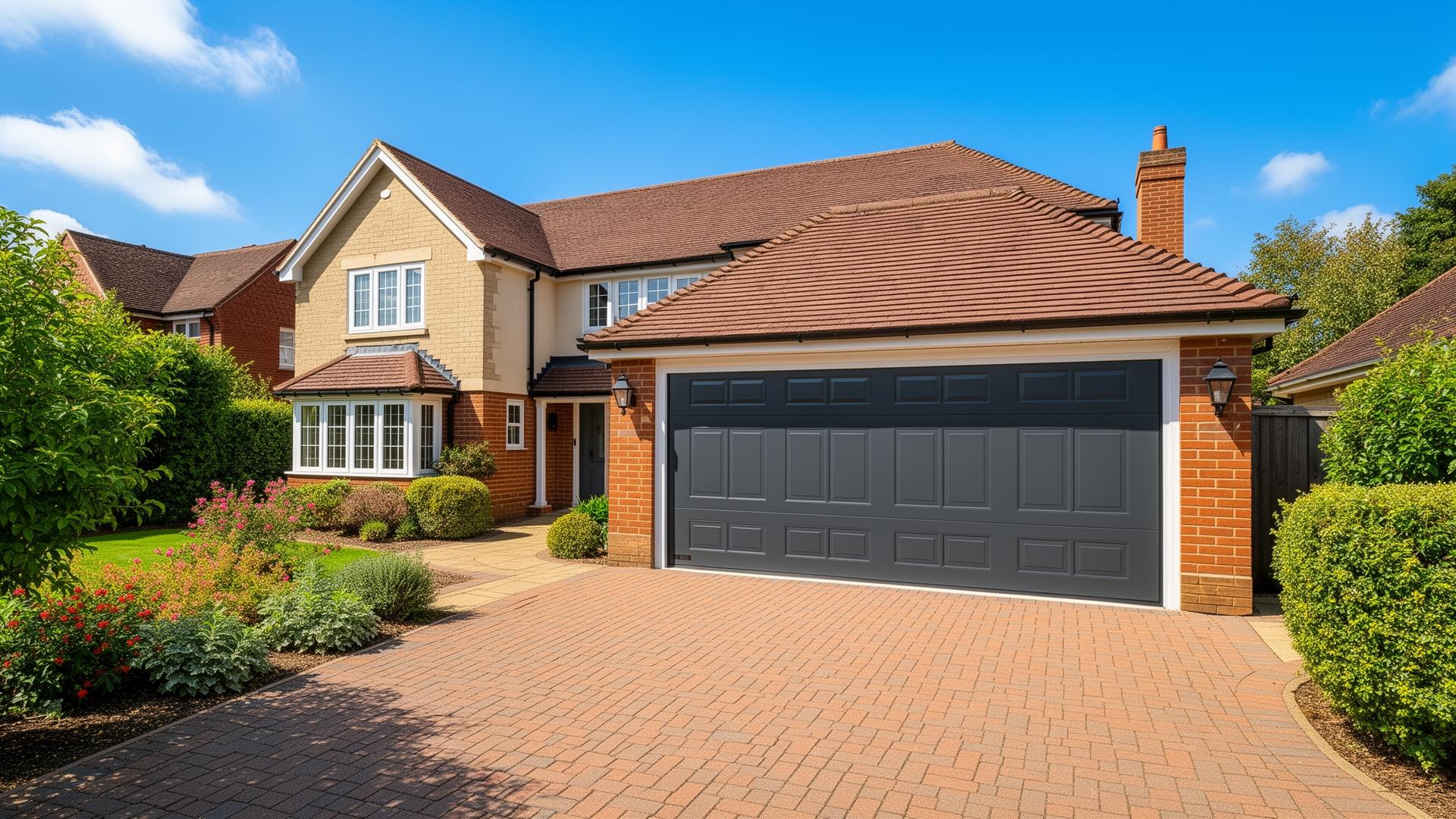
Anthracite Grey (RAL 7016) is by a long way the most-requested garage door colour in the UK in 2026 — it pairs cleanly with matching window frames and modern render.
Jet Black (RAL 9005) is the second most common, especially on white render or pale brick.
Agate Grey (RAL 7038) is a softer, lighter alternative for homeowners who want a modern update without going too dark.
Chartwell Green (RAL 6021) suits cottage-style and period properties.
Whatever colour your front door or window frames are now, we can match the garage door to it exactly. Many homeowners pair a garage respray with uPVC window and door spraying at the same time for a complete front-of-house transformation.
Choosing a professional sprayer — what to look for
Ask which 2K system they use. Sika, Adler, Tikkurila and Mipa are reputable. If the answer is vague or mentions aerosol cans, walk away.
Ask for a written guarantee on the invoice — not a verbal '10 years'.
Ask to see recent local garage door work. Six months to two years old is the most telling. Our recent work and reviews page has dated examples.
Check the prep description. Degrease, key, metal-bonding primer, two top-coats. If any of those steps is missing, the finish won't last a winter.
Frequently asked questions
Can I just paint over an old painted garage door? Sometimes — but only if the existing paint is fully sound. Any flaking or chalking has to come off first, otherwise the new layer will lift with it.
Will the finish withstand a British winter? Yes. 2K polyurethane is UV-stable, frost-resistant and flexible enough to handle thermal movement. That's why we can guarantee it for 10 years.
How long until I can use the door after spraying? Touch-dry in an hour, gentle use within a few hours, fully cured in 7 days.
Do you spray electric and roller garage doors? Yes — the mechanism is masked and unaffected. Roller doors are sprayed slat-by-slat so the finish is seamless when closed.
Do you cover my area? We respray garage doors across Birmingham, Solihull, Coventry, Sutton Coldfield, Wolverhampton and the wider West Midlands. Get a free quote here.