Can You Paint a uPVC Front Door? (2026 Guide)
Yes — uPVC front doors can be sprayed any colour and last 10–15 years. Honest 2026 guide to colours, cost, prep and DIY vs professional spraying.
Short answer: yes — and the front door is the highest-impact respray on the house
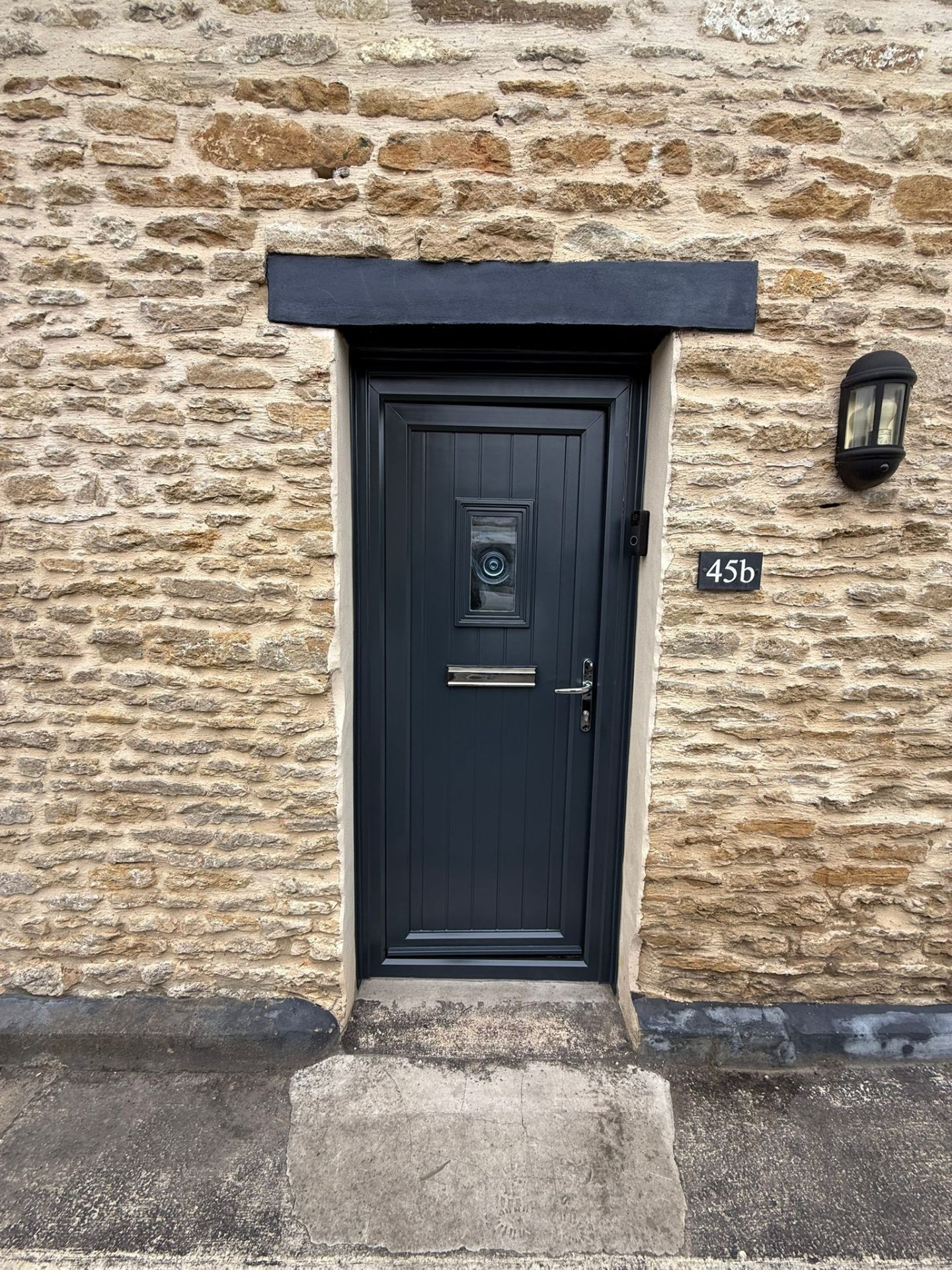
A uPVC front door can be painted, and on a busy street it's the single biggest visual change you can make to a property. The right colour lifts the whole frontage — black, sage, anthracite or a heritage navy can transform a tired entrance for under £200.
Brush-on uPVC paint will look tatty within a year. Professional spraying with 2K polyurethane lasts 10–15 years with a written guarantee, and matches perfectly to the rest of your windows and frames.
Brush paint vs spray — why front doors fail first
Front doors take more abuse than any other uPVC surface on the house: handles, letterboxes, kicks, keys, deliveries, sun, rain. That's exactly why brush paint fails on doors before it fails on windows — wear shows up around the handle and lock within months.
Spray-applied 2K polyurethane is automotive-grade. Once cured it shrugs off keys, parcels and weather the same way a car bonnet shrugs off motorway grit.
Most popular uPVC door colours in 2026
Jet black (RAL 9005) — the classic. Smart, timeless, works on Victorian, 1930s and modern homes alike.
Anthracite grey (RAL 7016) — pairs perfectly if your windows are already anthracite.
Chartwell green (F&B-inspired) — the heritage cottage favourite.
Hague blue / navy — bold but classy, especially behind a porch or canopy.
Sage green — a softer modern alternative to chartwell.
Burgundy / oxblood — a return-to-character option for period red-brick semis.
Side panels, transoms and the frame itself can all be sprayed to match — no awkward two-colour result.
What gets sprayed and what doesn't
Sprayed: the door slab (both sides if requested), the outer frame, the threshold cover plate, transom and side-panel uPVC, letterbox surround.
Masked off: glass, decorative leaded inserts, hinges, locks, handles, intumescent strips and gaskets. We can remove and re-fit the door furniture for an even cleaner finish on premium jobs.
Not sprayed: composite door slabs (different process — ask us first), stained-glass leaded panels, polycarbonate canopy roofs.
Process and time on site
Day 1 morning: Mask glass, frame edges, brickwork. Remove or mask door furniture. Degrease, abrade, apply uPVC adhesion promoter.
Day 1 afternoon: Two to three coats of 2K polyurethane top-coat in your colour. Touch-dry within an hour.
Day 1 evening: De-mask, re-fit hardware. Door is fully usable the same day.
Most front doors are completed in half a day to a day on site, with the house secure overnight.
Cost vs replacing the door
Spraying a uPVC front door (slab + frame): £180–£350 depending on size and side panels.
Replacing with a like-for-like uPVC door: £900–£1,800 supplied and fitted. A composite replacement runs £1,400–£3,000+.
Spraying delivers the visual upgrade for roughly 15–25% of the replacement cost, with no plastering, no door-furniture mismatch and no week-long wait for a fabricator slot.
Frequently asked questions
Can you paint a composite door? Different process — composites have a textured GRP skin. We can spray them but the prep is heavier; ask for a separate quote.
Can you change the colour of just the door, not the frame? Yes, though for the cleanest look most clients spray door + frame together.
Will it lock my door temporarily? No — we work in stages so the house is secure overnight.
How long before I can shut it properly? Touch-dry in an hour; safe to close gently the same day; full cure 7 days.
Is it guaranteed? Every door we spray carries a written 10-year guarantee. See real projects on our reviews page.